Portuguese Agroforestry Platform
The national agroforestry network, a member of EURAF — European Agroforestry Federation
About the Portuguese Agroforestry Platform
Agroforestry Portugal aims to make agroforestry in Portugal more visible, connected, and accessible. Our goal is to strengthen the agroforestry community in Portugal, promote collaboration and knowledge-sharing, and contribute to the development and recognition of agroforestry as a resilient approach to land management and rural development.The platform offers a connecting point for farmers, landowners, professionals, researchers, students, NGOs, organizations, and policymakers, and anyone interested in agroforestry. Here, you can learn the fundamentals of agroforestry in Portugal, the different agroforestry systems found across the country, and connect with EURAF and the wider European network. We'll also be announcing national meetings (in-person and online) here, along with a map of agroforestry projects across the country, coming soon.This platform is developed and maintained on a voluntary basis and will grow gradually as more people and organizations contribute their knowledge, projects, and ideas.
What is agroforestry?
Agroforestry is the deliberate integration of trees and shrubs with agricultural crops and/or animals on the same plot of land, creating ecological and economic interactions between these elements. This approach is recognized under the European Union's Common Agricultural Policy (CAP) and can take many forms, from trees integrated into fields and pastures to orchards, hedgerows, and other mixed systems 1. Turning this recognition into practice on the ground requires coordinated effort across countries, and this is the role of the European Agroforestry Federation (EURAF), which brings together national associations, researchers and farmers to promote agroforestry and advocate for its support in EU and national policy 2.

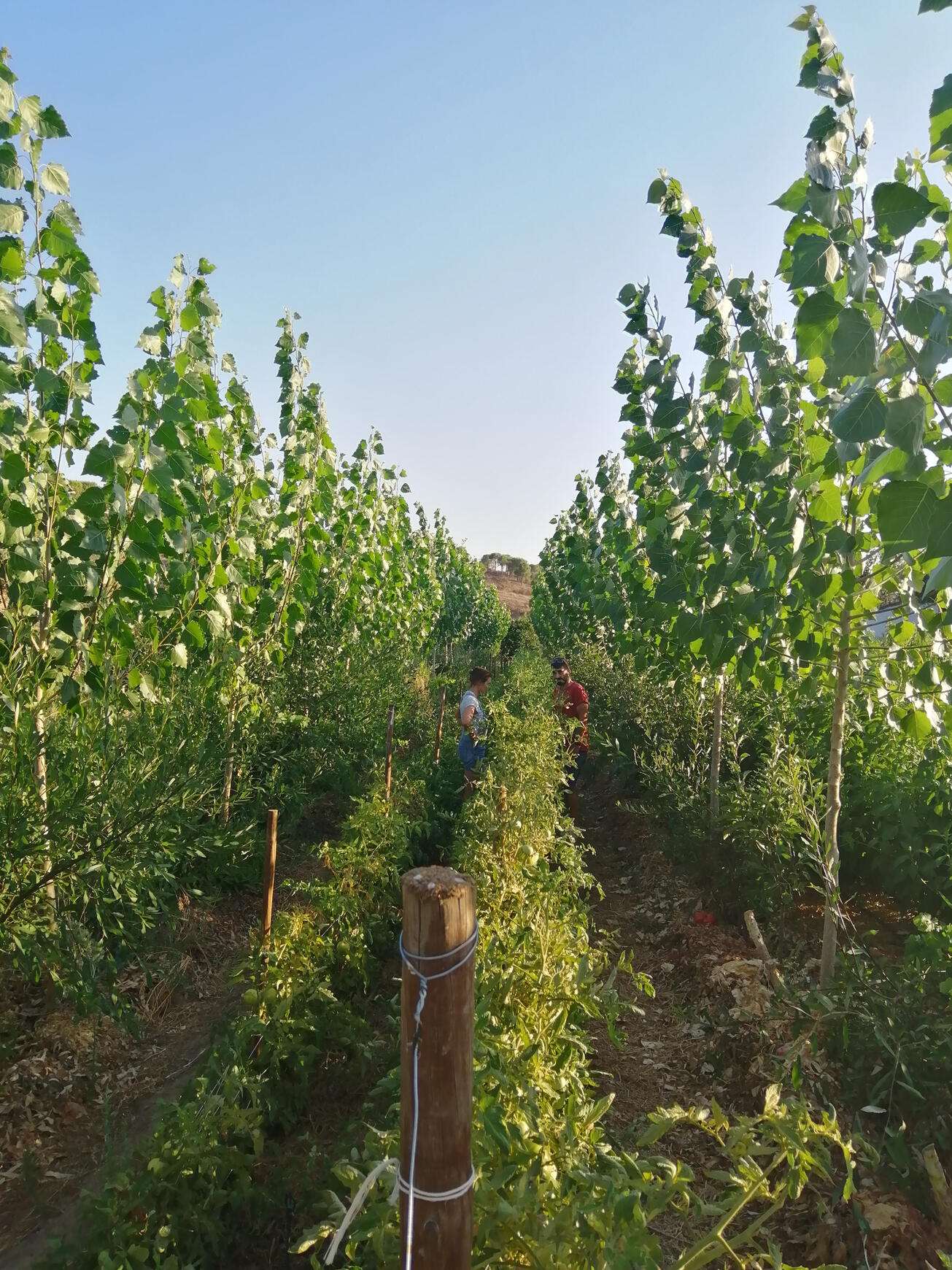
Silvo-arable agroforestry in Portugal. Source: Fotografia de Pedro Nogueira, Associação Terra Sintrópica.
Benefits of agroforestry
• Climate change adaptation and mitigation• Biodiversity conservation• Reduced soil erosion and improved soil health• Increased water retention• Natural pest and disease regulation• Reduced wildfire risk• Promotion of pollination and other ecosystem services 3.These benefits are particularly relevant to Portugal. As a Mediterranean country, Portugal is highly exposed to the impacts of climate change and faces challenges including desertification, water scarcity, soil degradation, and increasing wildfire risk 4.Agroforestry can contribute to more resilient and productive landscapes, while supporting agricultural production and the protection of soil, water, and biodiversity.
Agroforestry in Portugal
Portugal has one of the largest agroforestry areas in Europe, totaling approximately 1.2 million hectares and accounting for 32% of its utilized agricultural land 5.Agroforestry is deeply rooted in Portuguese agricultural tradition. It is an integrated practice that has evolved over centuries and continues to play a key role in addressing contemporary challenges related to climate change, rural development, and ecosystem conservation. The montado is the most iconic example of this tradition, a defining feature of the Portuguese agricultural landscape 6.From the montado to silvoarable systems, agroforestry in Portugal takes many different forms, shaped by each region's geography, climate, and traditions. We've organized the main systems into four categories — not as an exhaustive list, but as a starting point for exploring the diversity of Portuguese agroforestry.

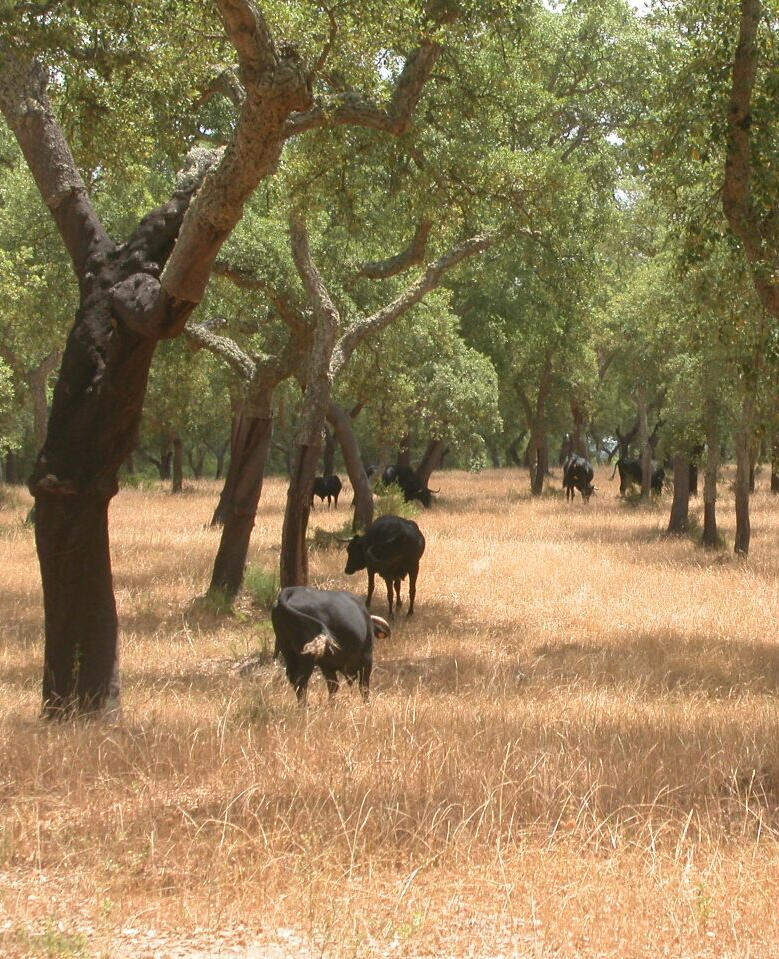
Montado landscape. Photography: Joana Amaral Paulo / Instituto Superior de Agronomia
Silvopastoral systems
This category brings together low-density tree-cover systems over pasture — the classic "parkland" model that defines much of Portugal's agroforestry landscape, especially in the interior and south.MontadoThe montado is a distinctive agro-silvo-pastoral system found mainly in the Alentejo region of southern Portugal. It is dominated by cork oak (Quercus suber) and holm oak (Quercus ilex subsp. rotundifolia) woodlands, integrated with grasslands and pastoral activities. The montado is a park-like landscape of scattered trees of varying densities and wide canopies spread over a productive herbaceous understory.This multifunctional system supports livestock production, agriculture, forestry, beekeeping, hunting, and eco-tourism, providing a mosaic of habitats crucial to biodiversity while remaining deeply tied to rural livelihoods and carrying significant cultural and socio-economic value throughout Portugal. The European Environment Agency classifies the montado as a High Nature Value (HNV) farming system, where agricultural productivity and biodiversity conservation go hand in hand 7. A closely related system, the dehesa, is found across the border in Spain, sharing much of the same ecological structure, land-use history, and cultural significance.
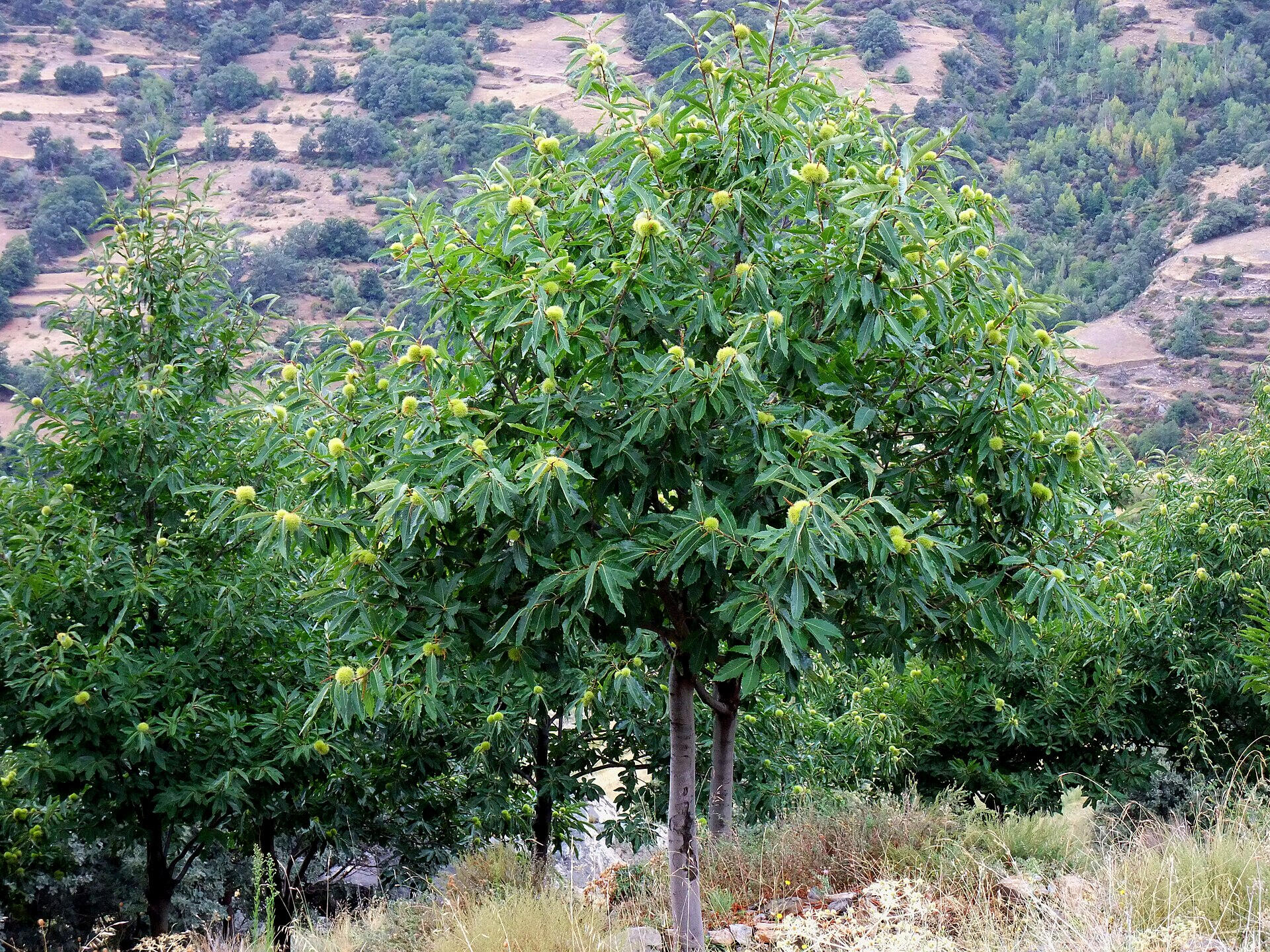
Soutos e CastinçaisIn northern and central Portugal, soutos and castinçais are low-density systems based on the sweet chestnut (Castanea sativa), with an average density of around 89 trees per hectare and covering approximately 41,410 hectares. They combine the production of chestnuts or high-quality timber with permanent pasture for livestock, and may include Pyrenean oak (Quercus pyrenaica) in mixed stands. In 2013, national chestnut production reached around 22,000 tonnes.In the Bragança region, chestnut orchards are sometimes intercropped with cereals consumed by sheep, taking advantage of the trees' relatively open spacing. This system occupies a distinctive position between orchard, woodland, and silvopasture — one of the clearest examples of a Portuguese agroforestry system able to shift between fruit, timber, pasture, and cereal production depending on how it's managed 8. By combining fruit, timber, and pasture production on the same plot, this system allows rural holdings to diversify income and reduce dependence on a single crop 9.

A chestnut grove with green burrs amid a mosaic of terraces, pastures and woodland. Chestnut groves are a traditional agroforestry system of mountain areas, combining nut production with grazing and landscape conservation. Photography: Nikater

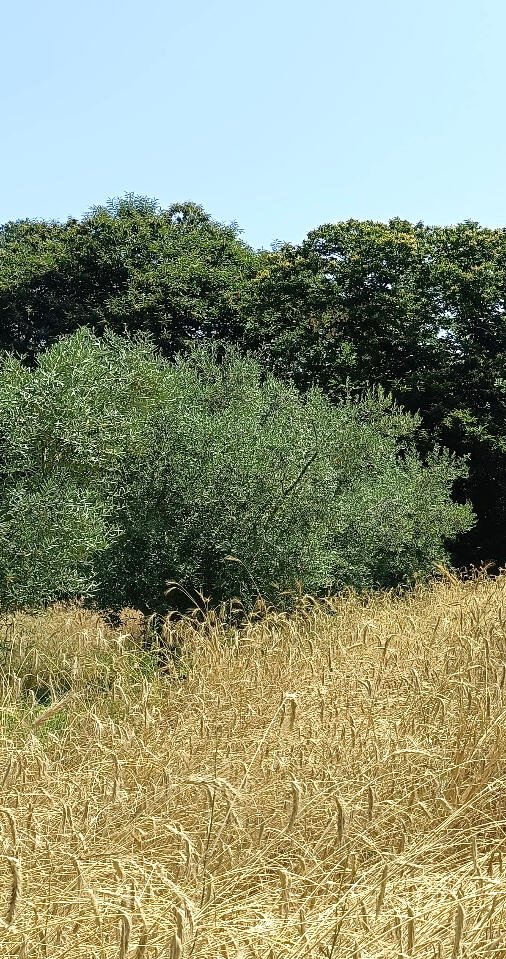
Silvopastoral olive system. Source: TRANSITION project (PRIMA Programme), Department of Agriculture, Food and Environment, University of Catania.
Silvoarable systems
Silvoarable systems combine trees with annual or rotational crops — cereals, vegetables, or legumes — rather than permanent pasture. It's one of the most diverse — and most underrepresented — categories of Portuguese agroforestry, ranging from orchards intercropped with rainfed crops to montado-type configurations where cereal and pasture share the same land, a historically common practice before cereal cultivation declined in the 20th century.Nationally, this type of system covers around 76,500 hectares, of which 40,100 hectares correspond to montado-type cereal-and-pasture configurations. It's one of the more underrepresented systems in official statistics, though, since agricultural policy frameworks tend to recognize permanent grazing more readily, leaving many tree-and-annual-crop mosaics uncounted 10.Silvoarable olive systemsSilvoarable olive systems combine olive trees with annual crops — such as cereals or legumes — grown in the strips between tree rows, allowing oil or table-olive production alongside a second harvest on the same plot.
Nationally, fruit, nut, and olive orchards intercropped with arable crops together cover around 36,400 hectares. Studies on intercropping olive trees with cereals and legumes show that this practice can increase the system's overall productivity compared to standalone crops, improve soil fertility, increase water retention, and reduce erosion — in most cases without compromising olive yield itself 11.
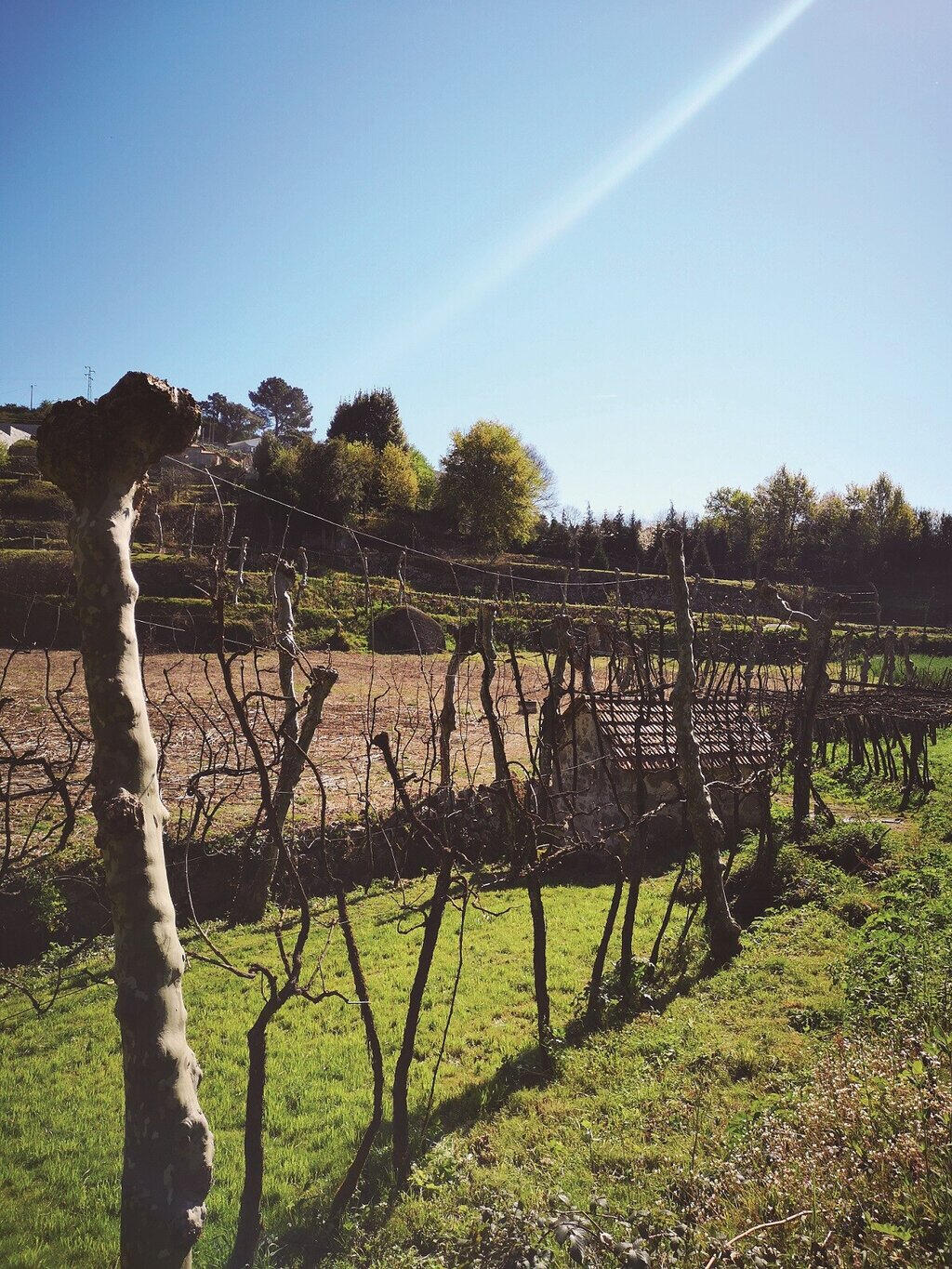
Vinha de EnforcadoIn northern Portugal there's an ancestral agroforestry system, dating to the medieval period, now in rapid decline: the "hanged vineyard" (vinha de enforcado). In this system, trees such as oak, elm, or cherry serve as living supports for grapevines, which grow upward rather than being tied to stakes or wires, while maize and vegetable crops are grown between the rows.It's one of the most distinctive examples of Portugal's agroforestry diversity — a combination of traditional viticulture, cereal production, and the functional use of the tree as a living structure — and represents a form of family farming that for centuries allowed small holdings to diversify production from a single plot. Today, it is at risk of disappearing 12.

Vinha do Enforcado, Lousada — traditional vine-training agroforestry system using large "uveiras" trees as living supports for grapevines. Photo: Câmara Municipal de Lousada.

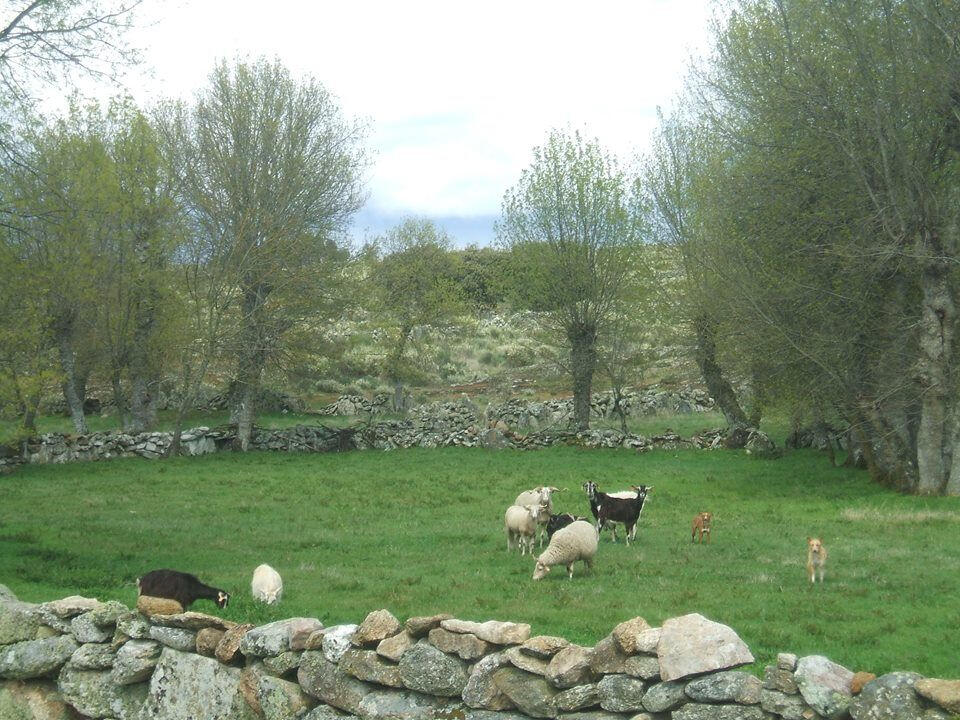
Lameiro in Pinhel: a permanent meadow bordered by dry-stone walls and pollarded trees, grazed by sheep and goats. A traditional agroforestry system combining livestock, fodder and landscape conservation. Photograph: Joana Amaral Paulo / Instituto Superior
Sistemas Lineares e em Mosaico
This category covers systems where trees don't form continuous cover but are distributed through the landscape as hedges, borders, or lines — often on small, fragmented holdings, especially in the north.In northern and central Portugal, lameiros are natural or improved pastures where trees appear scattered — as hedges, field borders, or riparian lines along watercourses. They serve multiple functions: marking property boundaries, providing firewood and animal feed, protecting against water and wind erosion, and improving pasture conditions.
This system is especially hard to quantify, since its trees are distributed across small, fragmented holdings rather than forming a continuous, easily mapped canopy — average farm size in the region was just 6.5 hectares in a 2013 survey. In recent decades, reduced grazing has contributed to the abandonment of these landscapes and to changes in the composition of lameiros and other pasture-based mosaics. Beyond their productive function, lameiros play an important role in regulating the water cycle and protecting waterways, contributing to water resilience in northern Portugal's landscapes 13.
Contemporary Agroforestry Approaches
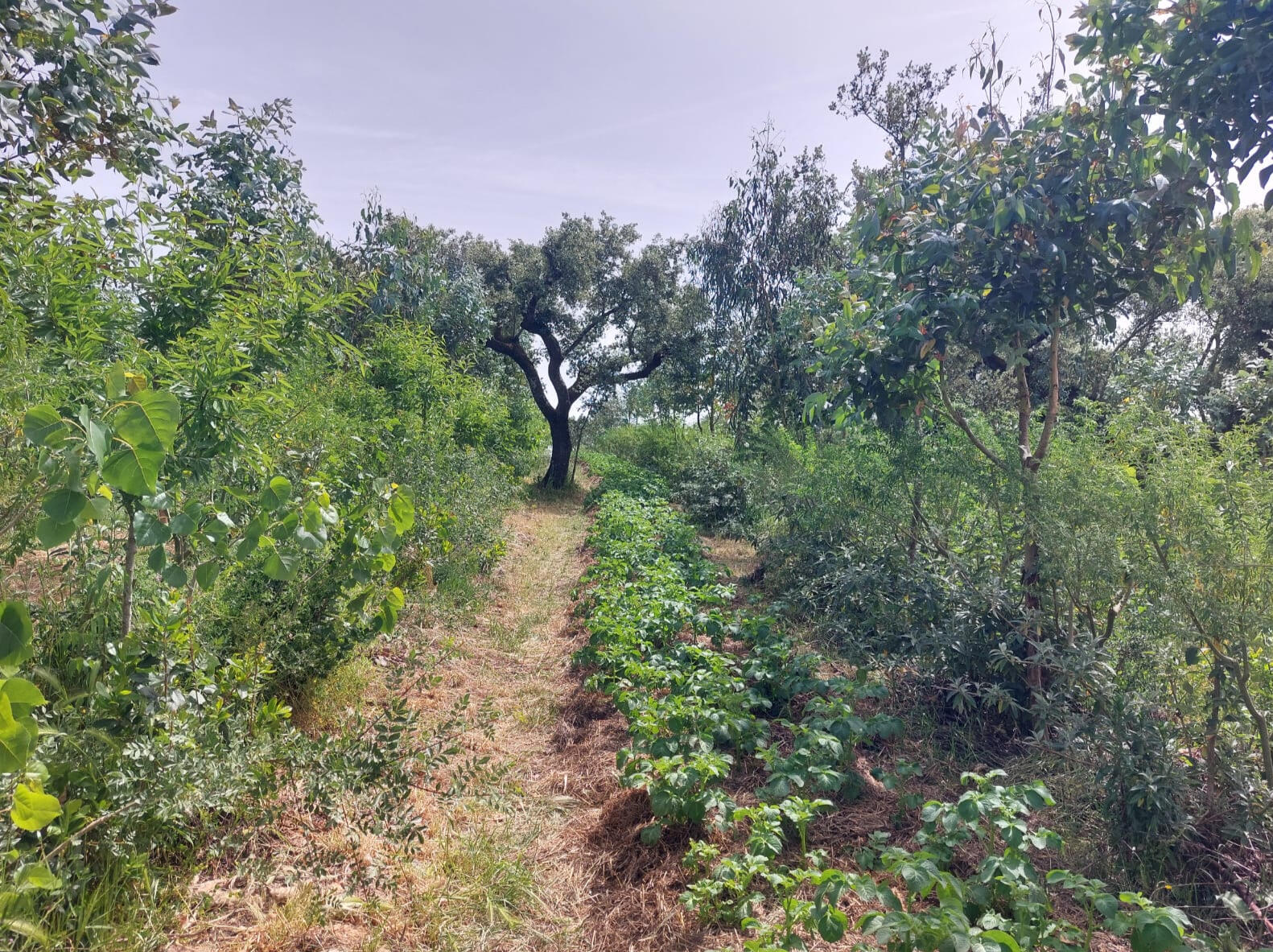
Beyond the traditional systems, a new generation of agroforestry approaches has been emerging in Portugal — denser, more diversified, and often inspired by soil-regeneration and water-management techniques. These approaches don't replace montado or the other traditional systems; rather, they extend their multifunctional logic, testing new ways to design, manage, and restore agroforestry landscapes in Portugal.Successional and Syntropic AgroforestrySuccessional agroforestry organizes plants by strata, growth rate, and ecological function, following the logic of natural succession over time. Fast-growing species are repeatedly pruned, and the resulting material is placed on the soil to support decomposition, moisture retention, and nutrient cycling — a technique originally developed in tropical contexts and now being adapted to Portugal's Mediterranean climate 14.Food Forests and Diversified OrchardsFood forests combine trees, shrubs, herbaceous plants, and productive ground cover in a layered structure, often complemented with biomass or pollinator species. In Portugal, examples include diversified olive groves, mixed orchards, and systems established on degraded or fire-prone land 15.

A syntropic agroforestry alley at Quinta das Abelhas, run by Marc Leiber — dense rows of biomass and fruit trees flank a vegetable crop, with a large tree anchoring the system. Photo: Anne Bouwmeester
Policy and Institutional Context
Portuguese agroforestry operates within a complex policy framework due to its multifunctional nature. It falls under multiple domains, including agricultural policy, forest management, biodiversity conservation, and climate action. The coexistence of agricultural and forestry regulations often leads to coordination challenges, making consistent policy support an ongoing issue.Numerous associations represent the interests of landowners and farmers engaged in agroforestry, including the União da Floresta Mediterrânica (UNAC), the Associação Florestal de Portugal (FORESTIS), the Associação Portuguesa da Cortiça (APCOR), the Federação Nacional das Cooperativas de Produtores Florestais (FENAFLORESTA), and the Associação Portuguesa da Castanha (REFCAST). Multifunctional land-use associations, such as AguiarFloresta, also play an important role in representing integrated management approaches. Research institutions such as the Forest Research Centre (CEF-ISA, University of Lisbon) contribute scientific expertise and innovation for advancing agroforestry knowledge and practice.Coming soon: a Policy Brief is being developed by a working group on agroforestry in Portugal, supported by the European Agroforestry Federation (EURAF) and the DigitAF Project of the Horizon Europe program.
EURAF in Portugal
What is EURAF?EURAF, the European Agroforestry Federation, connects land managers, farmers, livestock producers, researchers, and other professionals interested in the interactions between trees, crops, and animals. As research and practical experience continue to grow, one message becomes increasingly clear: agroforestry is a key part of the future of sustainable land use.Why join EURAF?Joining EURAF gives you access to a strong European network, the latest knowledge and best practices in agroforestry, and opportunities for training, collaboration, and visibility. Membership also provides a channel to follow and contribute to policy discussions, strengthen advocacy efforts, and connect with funding and partnership opportunities for agroforestry projects.When is the next EURAF conference?EURAF holds a European conference every two years, bringing together 400+ researchers, farmers, and policymakers. The most recent took place in Neuchâtel, Switzerland, in June 2026 — the next edition will be announced on EURAF's site in due course.How can I become a member of EURAF?If you are in Portugal and would like to join EURAF, you can register through the Dryland Agroforestry Center (DAC), Portugal's national EURAF contact point. For questions about membership, you can also get in touch with us. To see all the ways to become a member of EURAF, click the button below.